


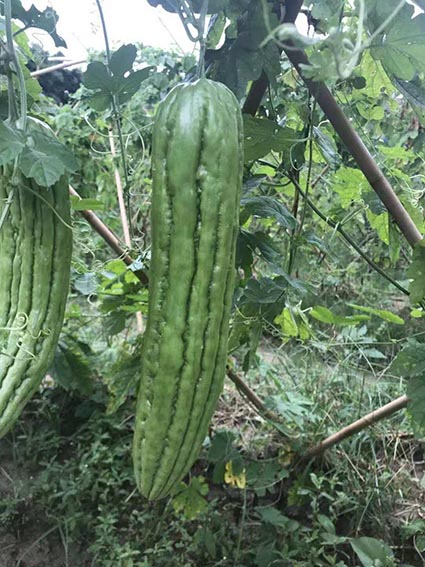
Long Green bitter gourd
Description of the variety
Belonging to the Cucurbitaceae family, long green bitter gourd (Momordica charantia) is a vigorous vine with deeply lobed leaves and slender tendrils that help it climb. The plant produces pale yellow flowers, with male and female blooms on the same vine. Fruits are long, cylindrical, and covered in warty ridges, turning to bright green as they mature. Native to tropical and subtropical regions, bitter gourd thrives in warm, humid climates and is especially popular in Chinese, Indian, and Southeast Asian cooking. Nutritionally, it’s rich in vitamin C, potassium, and antioxidants, and is often used in traditional medicine for its anti-inflammatory and blood-sugar-lowering properties.
Planting Guidelines
Sow seeds directly into well-drained, fertile soil once daytime temperatures consistently exceed 20°C. Choose a sunny location and provide a strong trellis or support for vertical growth. Plant seeds 2–3 cm deep, spacing them 60–90 cm apart. Keep the soil evenly moist during germination (7–14 days) and early growth. Apply compost or organic fertilizer before planting, and feed with balanced fertilizer every 3–4 weeks during the growing season. Prune excess side shoots to encourage fruiting and improve airflow.
Additional Remarks
Long green bitter gourd is relatively hardy but may be affected by aphids, fruit flies, or powdery mildew in humid conditions. Regular harvesting of young fruits improves yield and flavor, as overripe gourds become tough and overly bitter. Training vines vertically not only saves space but also enhances fruit shape and reduces pest issues.
Diseases Information
Planting Timetable
| MONTH | JAN | FEB | MAR | APR | MAY | JUN | JUL | AUG | SEP | OCT | NOV | DEC |
| SOWING | ||||||||||||
| TRANSPLANTING | ||||||||||||
| HARVEST |
The above schedule is based on the Sydney lowland area